Though not
yet ubiquitous, the odd-looking pattern of squares and dots that make up the
Quick Response (QR) code are popping up in more places and on more media with
each passing day. Most major advertisers have leveraged this two-dimensional
barcode symbol to get a leg up on marketing and sales, but the availability of
free, online QR code generators make reaching out to customers with QR
technology available to virtually anyone. As always, taking advantage of new
technology takes a bit of foresight and planning to most effectively implement
it. QR codes are no exception.
QR codes
lend themselves to a fairly easy way to identify audience — smart phone users.
While QR codes can be read with many standard barcode-scanning devices, few
consumers carry portable dedicated scanners. However, the growing popularity of
smart phones, and QR code-scanning applications for them, has steadily spread
the target audience and, most likely, will continue to propagate among the
general cellular market for some time. According to Nielsen, the number of
smart phone users has grown to make up about 40% of the cellular market. As the
percentage of smart phone users increases, so too will the marketing
opportunities through this unique channel.
Unique
channel? How can a barcode be "unique," much less a "channel?"
Well, QR codes
are graphically well-suited for scanning by phone cameras. By design, they are highly
efficient and capable of being rapidly scanned. Furthermore, a single QR code
can store up to 4,296 alphanumeric characters (think the lyrics to Don
McLean's, "American Pie"). Granted, efficiency and impressive storage aren't
necessarily unique qualities in the world of 2D barcodes, but high readability
by smart phone cameras is. That's what turns a simple, static data storage tool
into a marketing channel. When your potential customer scans a QR code on his
or her TV screen, a billboard, a computer monitor or your external packaging to
access more information about your product or service, they create a real-time
interface between the real world and the virtual world. This interface provides
you with a unique opportunity to push targeted information back, instantly. This
process is known among the barcode cognoscenti as hard linking.
new, or at least newly introduced, technologies (after all, Denso Wave introduced QR back in 1994), initially
the innovation gets a lot of attention, while it's still fresh. Right now, people
are anxious to use their smart phones in yet another new and exciting way, like
opening a web page with detailed information about the product or service
tagged with a QR symbol. Companies like Starbucks are using QR codes for credit
card-like transactions on the iPhone. Other companies are using static URLs within
QR codes and changing the URL content based on different market factors. Ultimately,
sustaining consumer interest in this channel will require inventing evermore creative
ways to drive meaningful, targeted and personalized marketing content that
inspires consumers to keep scanning.
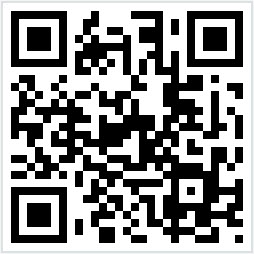 I practice what I preach, too. Here's a QR code I created online for free that points to my personal woodworking blog. I posted it on my personal Facebook page and got a surge in hits almost immediately. |
DAVE MARTINA is the vice president of systems integration
for NEPS, LLC of Salem, New Hampshire,
a firm that provides solutions for the automation of
document-intensive business processes. For more,
email david.martina@NEPS.com.