For purposes of discussion in this article, the term document is defined as "recorded information or an object which can be treated as a unit." Document management, often referred to as document management systems (DMS) or, more frequently these days, as electronic document management (EDM), is the use of a computer system and software to store, manage and track electronic documents, electronic images of paper-based information captured through the use of a document scanner and even digital photos, audio and video capture through various devices that may include
smartphones and tablets.
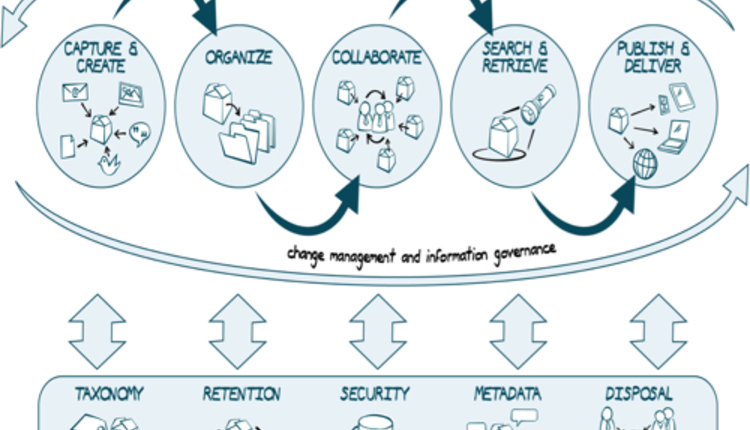
Based on this, let's now turn our attention to an aspect of EDM that is often overlooked but certainly an important element in establishing a strong environment to properly manage your electronic documents and content—the life cycle. This is a term heard frequently in relation to records and information in a broader sense, but when there is talk about documents, few make the connection or relate a need. The diagram shown here depicts how AIIM views the document/content management life cycle.
To begin with, look at the core activities of the life cycle by breaking it down into five elements or stages from an information worker's perspective. These are:
- Capture & Create
- Organize
- Collaborate
- Search & Retrieve
- Publish and Deliver
As you look at these stages, also consider the stakeholder and process related to these stages. How does the worker create the information? Are there templates in place, or is each document written independently? Is the document placed in a repository, a shared drive or personal storage device? How are these documents organized and what method of collaboration is used in the process? When the worker needs information, how do they search for it and on what type of device, which will have an impact on how it is published and delivered.
Supporting the life cycle stages is the information architecture. I am not talking about technology in this case, though as a tool and part of the architectural infrastructure. What I am talking about here focuses on the document and content itself. The information architecture in this part of the discussion focuses on the following areas:
- Taxonomy
- Retention
- Security
- Metadata
- Disposal
In my view, a well-planned and maintained EDM life cycle program is one of those that not only helps an organization organize and maintain control over its content, it provides strength and defensible ways to minimize risk. Regulatory guidelines, litigation and audits all require that content, like records, be managed properly. Your life cycle strategy should help define content value, security requirements related to the complete document life cycle from creation through disposition. If content has no value and you are holding on to it for no legitimate reason, get rid of it. Documents you have in hand are documents that can be discovered and potentially place you at risk.
Bob Larrivee is an internationally recognized thought leader with over 30 years of experience in document imaging, content management, records management, the application of advanced technologies, and process improvement. Follow him on Twitter @BobLarrivee or visit boblarriveeconsulting.com.